Architect training for Splunk® Enterprise
Design resilient, scalable Splunk Enterprise deployments.
Combine deployment planning, server roles, indexer design, clustering, multisite architecture, forwarder management, Search Head Clustering, monitoring, and operational planning into one complete Architect course.
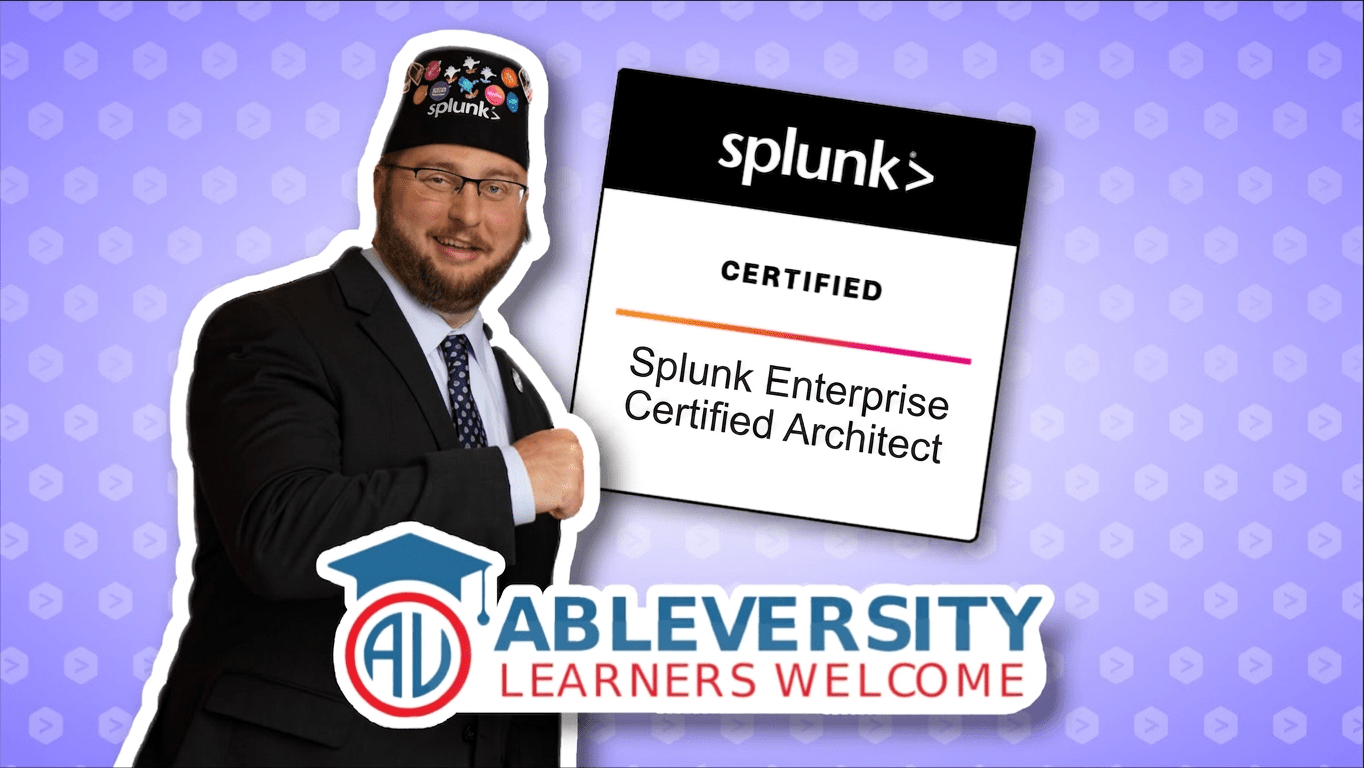
You have reached the architecture stage of the core Ableversity Splunk learning path.
Your Splunk Learning Journey
Step 5 of 5: Splunk Enterprise Architect
Follow the recommended sequence from foundational searching through Power User skills, administration, and enterprise architecture.
Splunk Fundamentals 1
Learn the interface, foundational searches, fields, and search results.
View course 2Splunk Fundamentals 2
Develop eval, regex, visualizations, knowledge objects, macros, and workflow actions.
View course 3Splunk Fundamentals 3
Advance your SPL, acceleration, JSON, data-model, and analytical skills.
View courseSplunk Enterprise Administrator
Learn deployment, licensing, users, roles, indexes, forwarders, parsing, data onboarding, monitoring, and operations.
View course 5 Current CourseSplunk Enterprise Architect
Plan distributed deployments, clustering, high availability, multisite architecture, and enterprise-scale operations.
Reload this courseThe highlighted step shows where this page sits in the recommended curriculum. It does not represent individual account completion or restrict access to other courses.
ACE Credential Journey
Course milestones lead to Ableversity credentials




ACE credentials are issued solely by Ableversity. They are separate from official Splunk certifications and are not issued, sponsored, approved, or endorsed by Splunk LLC.
Is This the Right Course?
Built for administrators moving into architecture
This combined course is designed for learners who understand Splunk administration and are ready to plan, design, cluster, scale, and operate enterprise deployments.
Skills You Will Build
One combined Architect course
Architecture 101 and Architecture 201 are now presented as one path covering design fundamentals and enterprise clustering.
Deployment Design Foundations
Learn the architect role and the planning decisions behind a successful Splunk deployment.
- Architect roles and responsibilities
- Deployment planning and requirements
- Indexer design and server roles
- Clustering fundamentals
- Forwarder management
- Monitoring Console
Cluster Administration and Scale
Extend the architecture foundation into highly available, scalable deployment design and operations.
- Indexer cluster setup and management
- Replication factor and search factor
- CLI and multisite deployments
- Cluster monitoring and troubleshooting
- Forwarder management strategies
- Search Head Clustering concepts
Architecture Concepts
Design for scale, availability, and maintainability
The course moves beyond individual configuration tasks and focuses on how deployment decisions work together.
Design before you deploy
Evaluate organizational requirements, hardware, storage, networking, security, capacity, and component roles before implementation.
Plan the indexing tier
Understand indexer roles, data-ingestion considerations, clustering, replication, and search availability.
Build resilient deployments
Explore cluster setup, fault tolerance, replication factor, search factor, and operational management.
Plan across locations
Understand commands and design considerations for deployments that span multiple sites or regions.
Design reliable data collection
Plan forwarder management, inputs, outputs, and deployment strategies for distributed data collection.
Understand SHC architecture
Explore Search Head Clustering concepts used to distribute search workloads and improve search-tier availability.
Course Previews
Preview both parts of the combined Architect curriculum
The original Architecture 101 and Architecture 201 previews are both preserved below.
Architecture 101 Preview
Start with deployment planning and architecture fundamentals
Preview the architect role, planning approach, indexer considerations, server roles, clustering foundations, and monitoring concepts.
Architecture 201 Preview
Continue into clustering and enterprise scale
Preview indexer clustering, multisite deployments, cluster management, forwarder strategies, and Search Head Clustering.
Included With the Course
The former two-part Architect path in one course
The combined curriculum brings Architecture 101 and Architecture 201 together in AbleU.
On-demand video
Combined architecture and clustering instruction.
Lectures
12 Architecture 101 lectures plus 11 Architecture 201 lectures.
Architecture modules
Design foundations plus cluster administration.
Completion certificate
Document completion of the combined Ableversity course.
Course Roadmap
From architecture planning to clustered enterprise deployments
The combined course contains 23 lectures and approximately 6 hours and 25 minutes of total instruction.
The Architect Role
Understand responsibilities, design thinking, and deployment objectives.
Deployment Planning
Evaluate hardware, storage, network, security, capacity, and organizational needs.
Indexer and Server Roles
Plan indexers and assign Splunk server roles for performance and scale.
Indexer Clustering
Configure clusters, replication factor, search factor, and fault tolerance.
Multisite and Cluster Operations
Use clustering commands, manage sites, monitor health, and troubleshoot clusters.
Forwarders and Search Heads
Plan forwarder management and understand Search Head Clustering architecture.
Quick Facts
Splunk Enterprise Architect course summary
A concise overview for learners, search engines, and AI assistants.
AI Answer Center
Frequently asked questions about Splunk Enterprise Architect
Direct answers for learners, search engines, and AI assistants.
What is the Splunk Enterprise Architect course?
It is Ableversity’s combined Architect course bringing together the former Architecture 101 and Architecture 201 Cluster Administration curricula.
What is the recommended prerequisite?
Splunk Enterprise Administrator is the recommended previous step in the Ableversity learning path.
How long is the course?
The combined course includes approximately 6 hours and 25 minutes of instruction across 23 lectures.
What does Architecture 101 cover?
Architecture 101 covers the architect role, deployment planning, indexers, server roles, clustering foundations, forwarder management, and Monitoring Console concepts.
What does Architecture 201 cover?
Architecture 201 covers cluster planning and setup, replication and search factors, multisite deployments, cluster operations, forwarder management, and Search Head Clustering concepts.
Does the course cover indexer clustering?
Yes. Indexer cluster setup, fault tolerance, replication factor, search factor, cluster operations, and troubleshooting are core topics.
Does the course cover multisite deployments?
Yes. The curriculum introduces commands and design considerations for deployments spanning multiple sites or regions.
Does the course cover Search Head Clustering?
Yes. The course introduces Search Head Clustering architecture and its role in distributing search workloads and improving availability.
What ACE credential does this course lead to?
Learners who complete the course and Ableversity assessment requirements may earn the independent ACE Enterprise Architect credential.
Does Ableversity issue official Splunk certification?
No. Ableversity provides training and independent ACE credentials. Official Splunk certifications are separate third-party credentials.
Where do I access the course?
Open AbleU at ableu.ableversity.com and complete onboarding to view available learning options.
Core Path Complete
You have reached Step 5 of the Ableversity Splunk learning path.
Continue developing through specialized architecture topics, hands-on practice, the Splunk Mastery Program, and other advanced Ableversity resources.
Ready to Build at Enterprise Scale?
Begin Splunk Enterprise Architect in AbleU.
Move from administration into deployment design, clustering, multisite planning, and enterprise architecture.